Would you like to be a character in this story? Why or why not?
If I had the chance, I would love to be a character in the Harry Potter novel that I am reading. I love magic, traveling and school and this novel combines all three in a perfect way. If I could choose which character I would be, I would probably choose Harry as I feel we are the most similar. For example, Harry has glasses, and so do I. As well, Harry is British and so is my Mother. Finally, Harry is a student, and I was once a student as well, although now I am a teacher. In conclusion, I would love to be a character in the novel, Harry Potter.
In our schools today, we recognize and acknowledge all sorts
of students from various backgrounds, including English Language Learners
(ELL); students with disabilities; students with learning disabilities;
students with behaviour difficulties; autism; anxiety disorder; gifted
students; Aboriginal Students; boys as unique learners; and so on. Today’s
teaching landscape does not pretend that the playing field is equal, and
rightfully so. Teachers need to be fully aware of their students’ needs and
strengths and in many cases these days, they are supported to do so in a
relevant manner. Except for one issue that we prefer not to talk about, and
that of course, is poverty.
In many respects, the playing field is not equal. Students
with socio-economic issues (i.e. poor or impoverished students) come to school
deprived of many of the building blocks for success that students from middle
and upper class families can take for granted. For example, many students from
lower-income backgrounds are not introduced to reading and books until they
reach Kindergarten, putting them at serious disadvantage when it comes to their
same age peers from higher income brackets. Despite wide acknowledgement of the
effects of poverty, it remains the monkey in the room. For example, Ontario
teachers can take an Additional Qualification course on several different
exceptionalities (http://www.oct.ca/members/services/findanaq),
but there is nothing offered on poverty, one of the factors that effects
students the most. Eric Jensen illustrates just how much poverty affects
children in school in his book entitled “Teaching With Poverty in Mind: What
Being Poor Does to Kids’ Brains and What Schools Can Do About It” (2009). He
cites issues as varied as: school attendance (which is deeply connected to
drop-out rates); negative parent attitude; attendance at a poorly maintained
school (with less qualified teachers); a sense of alienation from school in
general (http://www.ascd.org/publications/books/109074/chapters/Understanding-the-Nature-of-Poverty.aspx).
As you can tell from the above list, poverty is screaming to be recognized as a
major factor in students’ lives. I believe that the seriousness of the issue
demands that as teachers we take a stand so that these students do not fall
through the cracks of the education system.
Seeing how this is intended to be a blog about Math, I will
offer here strategies that are specific to that subject, though as with many
differentiation strategies, these can and should be generalized to other
subject areas.
Payne (2008), suggests that we “Translate the Concrete into
the Abstract” (http://www.ascd.org/publications/educational-leadership/apr08/vol65/num07/Nine-Powerful-Practices.aspx).
This is essential for Mathematics, but doubly so for students living in poverty
who may have had less access to abstract concepts. Payne refers to this process
as providing “mental models”. For students living in poverty this can
incorporate stories and situations that relate to their life experiences, i.e.
the things they are experiencing in their immediate neighborhood, in their
school community or in the community at large. For example, several years ago
when I was teaching a unit on measurement, we used examples from the
neighborhood (soccer field and local skating rink), to teach the abstract
concepts of area and perimeter.
For new teachers, it will take time to get to know the
neighborhood and community of the students you are teaching. It may also
require that you examine some of your own stereotypes about the neighborhood
and the community in general. Realistically, the only way to truly understand a
community is to spend time in it, with the people that live there. I addressed
this concept recently in an article I published in the SRV Journal entitled, “More
than Just a Tourist: Interpersonal Identification & the Elementary School
Teacher” (http://srvip.org/Journal_Jan_2014_TOC.pdf).
In the article, I speak about ways to help teachers identify with their
students, while also fostering positive identification in the other direction,
from students to teachers.
Heiman (2010), suggests teaching the “verbalization of math
steps” (p. 4). This would be an easy concept to integrate into a three-part
lesson, especially in part 1, where students could recite the steps back to the
teacher. This strategy is often used to help English Language Learners, but
would also benefit other students who are less comfortable with written language
(http://www.learningtolearn.com/data/BridgingTheMathAchievementGapLTL.pdf).
The final suggestion I’ll leave you with is to teach your
students to ask questions. This becomes key in part 3 of a three-part math
lesson, as it is an opportunity for teachers to check their students’ understanding
and offers students a chance to restate their learning for both themselves and
their peers. While this may come naturally to some children, depending on their
background, some students from impoverished backgrounds may not have the same
confidence in asking questions to reinforce their understanding. Payne (2008)
suggests placing students in pairs and having them practice on each other in
order for them to gain confidence in doing this in front of their peers and
teacher in the whole group setting.
Today, I would like to introduce you to one of my favourite
ways to teach the Mathematics curriculum; Cross-curricular
Planning. Most of you might already do something like this in your own classrooms,
or are planning to do so once you land yourself a steady job. In today’s modern
classrooms, the lines between subject areas continue to blur as new technology
and the philosophies they carry ingratiate themselves in the lives of teachers
and students. If you are in charge of a tech-friendly class, why not have them
google statistics about the human cost of the Nepal Earthquake (you might find this), or the
amount the Pan Am Games is costing taxpayers (here’s a few different perspectives:
Toronto
Sun & the
Games official website).
As I’m a big proponent of cross-curricular planning or
interdisciplinary lesson planning, people have often asked me questions such
as: Won’t students get distracted? Or, how do you keep the focus on math? My
first response to these questions is often: are your students not often
distracted during regular math lessons? Do many of them have trouble focusing
during your mathematics instruction? Cross-curricular planning doesn’t look to
replace mathematics with Social Studies, Science, etc. It actually aims to
bring math to the forefront and to demonstrate to skeptical students that not
only is math important for their cognitive development, but also that it is so
intertwined with our daily lives there is no escaping it! For better or worse,
mathematical thinking affects every decision we make, from making daily
purchases to city planning to the way their school day is structured. Several years
ago, Lynn Steen wrote an article for Educational
Leadership that in part presents an excellent argument for why Cross-curricular
planning is so important, especially considering the current cultural context:
“To make mathematics
count in the eyes of students, schools need to make mathematics pervasive, as
writing now is. This can best be done by cross-disciplinary planning built on a
commitment from teachers and administrators to make the goal of numeracy as
important as literacy. Virtually every subject taught in school is amenable to
some use of quantitative or logical arguments that tie evidence to conclusions.
Measurement and calculation are part of all vocational subjects; tables, data,
and graphs abound in the social and natural sciences; business requires
financial mathematics; equations are common in economics and chemistry; logical
inference is fundamental to history and civics. If each content-area teacher
identifies just a few units where quantitative thinking can enhance
understanding, students will get the message” (http://www.ascd.org/publications/educational-leadership/nov07/vol65/num03/How-Mathematics-Counts.aspx).
In her article, Steen presents us with a coherent, yet
urgent argument for why cross-curricular planning is necessary in today’s
classrooms. With a little bit of extra effort, we should be able to find the
connections that are students are craving.
The following video does a great job of illustrating the interconnectedness of the various educational disciplines.
Check out some of the links below for more cross-curricular
ideas:
One of the greatest tools in your back pocket as a new teacher
is the three-part lesson plan (see a basic plan here
that is applicable to all subject areas). I know you were probably rolling your
eyes as you read this last statement, but bear with me for a few minutes, as I
lay out my argument for why the three-part lesson plan is your new best friend
when it comes to planning your mathematics lessons. As part of an exercise for
the recent Math Additional Qualification course I took, I was asked to compare
and contrast the three-part lesson with the more traditional methods of teaching
math. In many respects, the results were quite revealing about the ways in
which we’ve tended to do things in the classroom. In the traditional lesson
column I noticed that most aspects of the lesson were teacher-centric; that is,
the teacher was the focus of the attention for students and was where they
gathered the information they needed. In the more modern three-part lesson, it
is the students who are more often in the driver’s seat, developing their own
understanding through trial and error, the sharing of their work and teacher
input and observation. Perhaps the hardest thing to get used to for teachers
committed to the three-part lesson plan is the amount of time they spend away
from the “front” of the classroom compared to the amount of time they spend in
the trenches so to speak, among the students as they delve into mathematical
problem solving head on. Scroll down to the bottom of this post to see my
comparison between three-part lessons and traditional teaching methods.
This youtube video provides an excellent summary of what a three-part math lesson entails:
Here are the results of my comparison between a three-part math lesson and a traditional one:
Traditional Math Lesson
Three-Part Math Lesson
Teacher led from beginning to end.
Teacher leads in the beginning and wraps things up in the end.
Teacher has one or two way interactions with students, but rarely or
never has the students interact with each other.
Depending on the lesson, students work in pairs or in small groups.
Students lesson to teacher lecture and then work independently.
Teacher sets up lesson, and then has students work in pairs, small
groups or independently, depending on the nature of the lesson.
Students receive written feedback from the teacher.
Students give and receive verbal feedback from their peers and
receive timely verbal feedback from their teachers.
Teacher spends the first part of the lesson, “setting up” the work
students will do.
Teacher spends the first part of the lesson, “setting up” the work
students will do.
Students work independently on the work their teacher has assigned.
Students work in different groupings depending on the work assigned.
As well sometimes students will work in different combinations (pairs,
groups, independently).
Once student has completed their work, they submit it to the teacher
to be graded.
Students and teacher debrief the work at the end of the lesson
(Reflecting and connecting), where students share ideas with each other, and
solidify their understanding of the concept(s) that were focused on. As well,
feedback is given while students are working. During this time the teacher
observes and asks questions meant to keep students on track and help them to
further develop their understanding.
Hello! And welcome to my new blog. It is here, in a series
of posts on planning in mathematics that I hope to reach out to young teachers
in an attempt to provide them with a behind the scenes view of mathematics
planning in general. Hopefully I’ll be able to answer some of the questions new
teachers might have about the concept of big ideas; the most effective ways to
plan a unit and/or lesson; and the benefits of cross-curricular planning. As most
of you know, members of the general public often hold the belief that math is “boring”
or not applicable to real-life scenarios. I’ll do my best in this blog to
refute such claims by posting fun and engaging videos and links that support
the information. Now, without further ado, here is my first post:
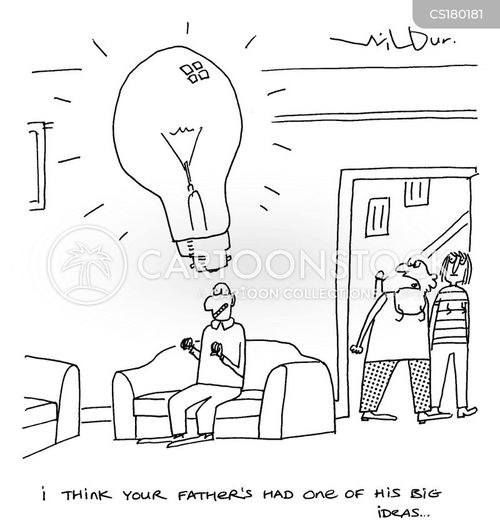
The concept of “Big Ideas” in Mathematics has been floating
around Ontario schools for at least a decade now (see for example, this
article) and is a theoretical expression of the idea that teachers should
focus on over-arching themes in their lesson planning rather than on each
particular curriculum point. In other words, according to Charles (2005), “Big
Idea is a statement of an idea that is central to the learning of mathematics,
one that links numerous mathematical understandings into a coherent whole” (10).
While at first teaching using the big ideas concept can seem overwhelming, with
practice it becomes routine. Ultimately, it helps both teachers and students to
see the interconnectedness of curriculum concepts, rather than seeing them as
isolated pieces that need to be taught one by one. Charles’ article lists
several big ideas concepts, but one example is: “BIG IDEA #2 THE BASE TEN
NUMERATION SYSTEM — The base ten numeration system is a scheme for recording
numbers using digits 0-9, groups of ten, and place value” (p. 13). As you can
see, for each grade, there are a large number of curriculum objectives that
fall under this big idea. In my classroom, I like to group units according to “big
ideas” concepts, rather than following the curriculum guide verbatim. While this
takes some reorganization, I believe that it leads to a stronger theoretical
understanding among students.
One of the biggest proponents of “Big Ideas” in Mathematics
(especially in Ontario) has been Marian Small (http://www.onetwoinfinity.ca/). Check
out this great series of webinars in which she explores and provides examples of
the Big Ideas in all math strands, grades K-3: https://erlc.wikispaces.com/Big+Ideas+in+Math+K-3
References:
Charles, R.I. (2005). Big Ideas and understandings as the foundation
for elementary and middle school mathematics. Journal of Mathematics Education Leadership, 7(3), pp. 9-24.